
Black Skimmer Tracking Project
The Black Skimmer Tracking Project (May 2026–September 2028) places GPS tags on Black Skimmers within a large local beach-nesting colony to determine where they go, why they return, and what makes their nests successful while they share the shore with the beach-loving public.
South Shore Audubon received an Audubon in Action Grant from National Audubon and generous donations from members to help fund this project.
The project builds on work initiated in 2018 by the Town of Hempstead Department of Conservation and Waterways, with which we are partnering, along with lead ecologist Kate Goodenough of Larid Research and Conservation, Audubon New York, Nassau County Soil and Water Conservation District, Hofstra University, Stony Brook University, New York State Department of Environmental Conservation, and the South Shore Estuary Reserve.
Our Goals:
- To make the connection between the birds’ beach-nesting colony and places where they forage by tracking individual movements using GPS tags.
- To study how upgrades to wastewater management infrastructure in the back bays (Bay Park Conveyance Project) affect the birds’ nesting and foraging.
- To determine where birds go on migration and why they return.
- To collect fecal samples for DNA metabarcoding to study the birds’ diet as well as blood and feather samples to assess the birds’ long-term diet and overall health.
- To determine what makes our beaches successful nesting grounds relative to other locations on the Atlantic flyway.
The Black Skimmer is currently listed as a Species of Special Concern in New York State. In New York’s 2025 State Wildlife Action Plan (SWAP), the Black Skimmer is listed as a High Priority Species of Greatest Conservation Need (HPSGCN).
Our tracking project will benefit not only Black Skimmers, but also other beach-nesting at-risk bird species such as Piping Plover, American Oystercatcher, Least Tern, and Common Tern. With tracking data, we plan to advance stewardship of nests, improve habitat and management, and expand and strengthen conserved areas.
Project Videos
You can see some of the activities involved in the project in the videos and photos below.
All videos by Sydney Walsh/Audubon
These first three videos show how the Town of Hempstead Department of Conservation and Waterways crew scans for Black Skimmer nests and places loop carpets, which are arrays of mono-filament nooses attached to wire mesh designed to entangle birds’ legs and feet.
The bill is measured to determine the sex; males have larger bills than females.
Lead ecologist Kate Goodenough explains how the GPS tags are placed on the skimmer.
Skimmer colony.
SSAS VP Brien Weiner releases a bird with SSAS President Guy Jacob.
GPS tag.
Photo Gallery
Click any photo to view full size and navigate through the project gallery.
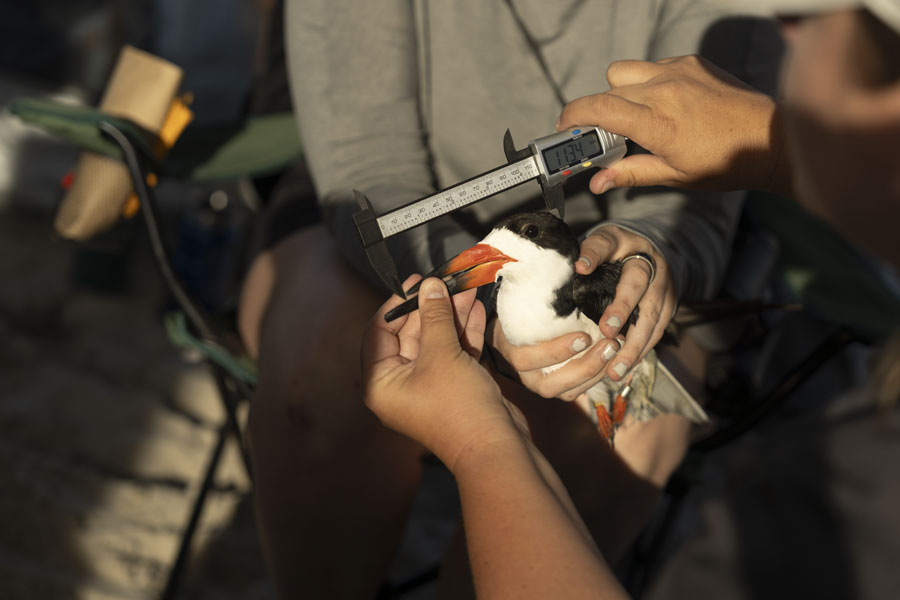
Measuring the bill to determine the sex.
Photo by Sydney Walsh/Audubon
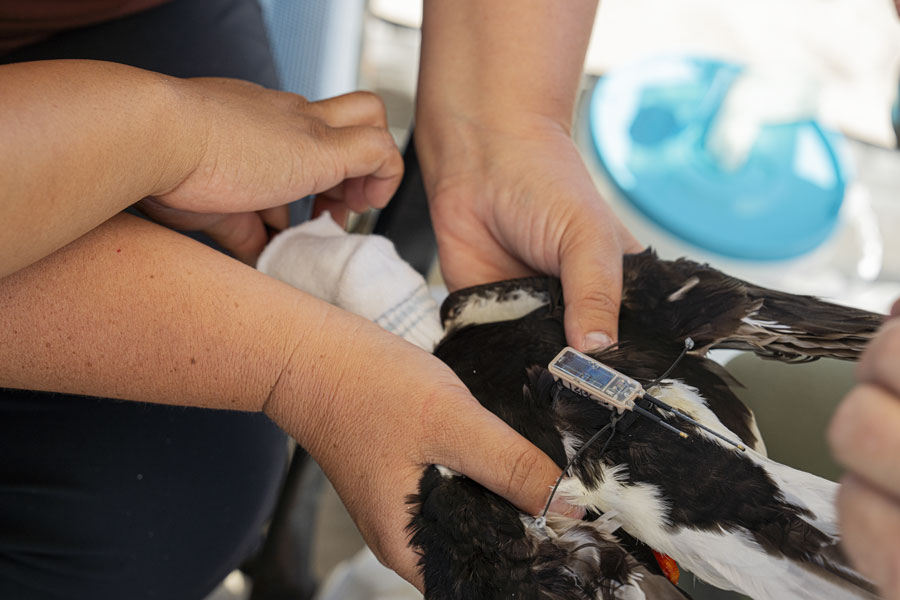
Placing the GPS tag.
Photo by Sydney Walsh/Audubon
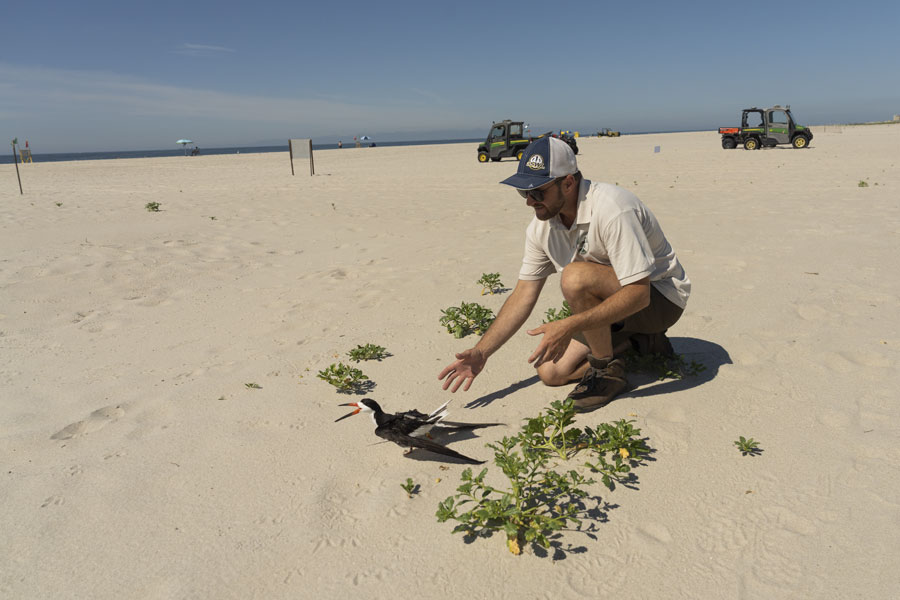
TOH Conservation Biologist Rob Longiaru releases a skimmer.
Photo by Sydney Walsh/Audubon
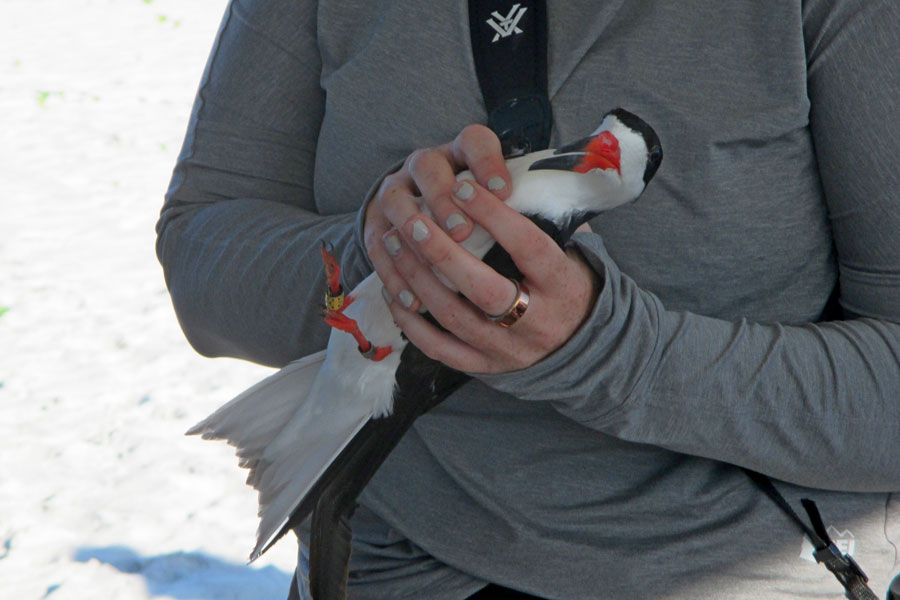
Skimmer with two bands for identification and field spotting.
Photo by Jay Koolpix
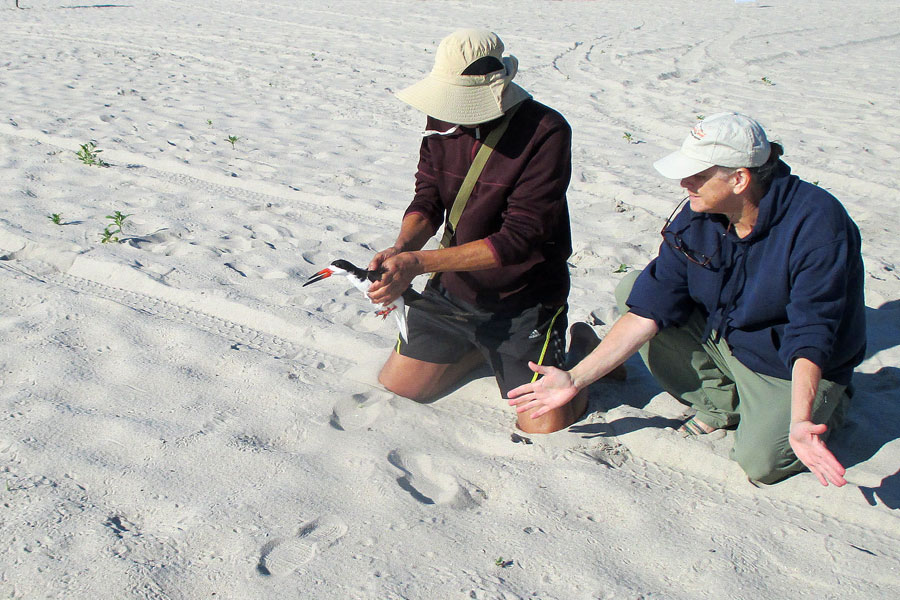
SSAS President Guy Jacob releases a skimmer with Kate Goodenough.
Photo by Jay Koolpix